
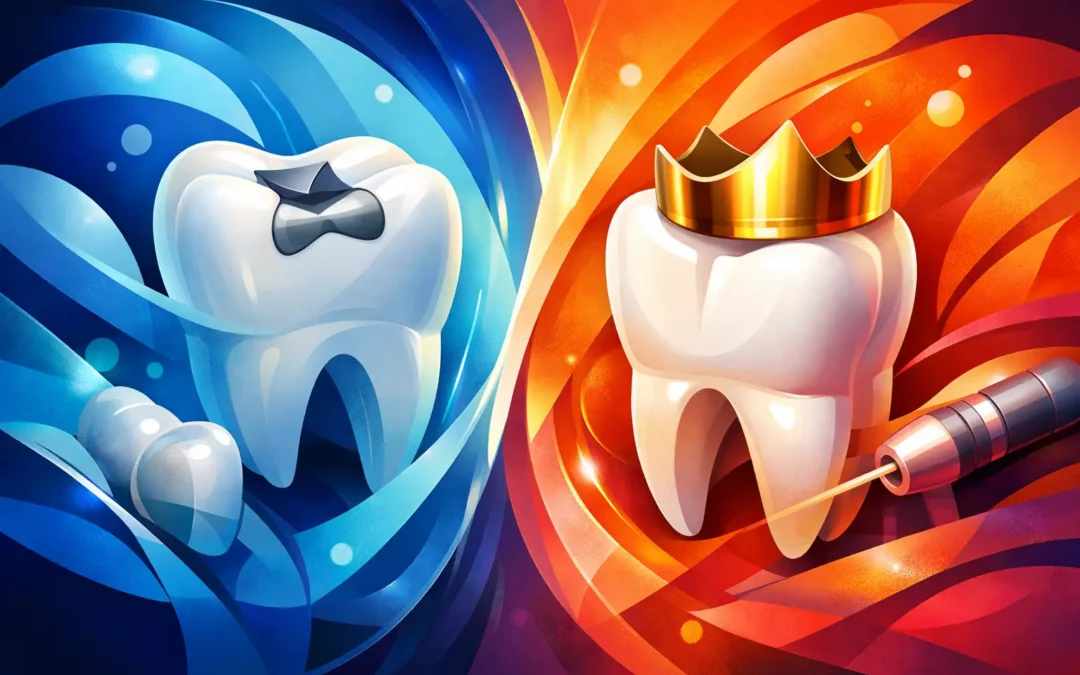
A chipped tooth that catches on your tongue, a painful bite, or a cavity found during a routine exam can all lead to the same question: dental filling vs dental crown – which treatment do you need? The answer is not about choosing the “better” option. It is about choosing the treatment that removes decay, protects the remaining tooth, and gives you the best chance of avoiding bigger problems later.
A dentist looks at how much healthy tooth structure remains, where the damage is located, whether the tooth has cracks, and how much pressure it handles when you chew. A small cavity may need only a filling. A tooth that is weak, badly broken, or treated with a root canal may need the added protection of a crown.
What a Dental Filling Does
A dental filling repairs a small to moderate area of decay or damage. After removing the decayed portion of the tooth, the dentist places a restorative material in that space and shapes it so you can bite comfortably. Many modern fillings are tooth-colored, helping the repair blend in with your natural smile.
Fillings are commonly used for cavities that have not taken away too much of the tooth. They can also repair minor chips or worn areas. In many cases, the appointment is straightforward: the area is numbed, decay is removed, the filling is placed, and the tooth is polished.
The main advantage of a filling is that it preserves more of your natural tooth. It is generally less extensive than a crown and often takes less time to complete. When a filling is the right choice, it can stop decay from spreading and restore normal function without covering the entire tooth.
Still, a filling has limits. If the remaining tooth is thin or weakened, a large filling can place pressure on fragile areas every time you chew. Over time, that tooth may crack, and a simple repair can turn into a more involved treatment.
What a Dental Crown Does
A dental crown is a custom-made covering that fits over the entire visible portion of a tooth above the gumline. Think of it as a protective cap designed to restore the tooth’s shape, strength, and chewing surface. Crowns may be made from materials such as ceramic, porcelain, metal, or a combination of materials, depending on the tooth and your treatment needs.
Before placing a crown, the dentist removes decay and shapes the tooth so the crown can fit securely. If the tooth has a very large cavity or is missing a significant portion, it may first be rebuilt with a supportive filling material. A temporary crown may be placed while the final crown is being made, depending on the treatment process.
Crowns are often recommended for teeth with extensive decay, large fractures, old fillings that have failed, or major wear. They are also commonly used after root canal treatment, especially on back teeth that manage heavy chewing forces. A root canal saves the inside of a tooth, but the tooth can become more brittle afterward. A crown helps protect it from breaking.
A crown requires more preparation than a filling and usually costs more. However, when a tooth is structurally weak, choosing a crown can prevent the loss of the tooth and the need for extraction or replacement later.
Dental Filling vs Dental Crown: The Key Difference
The simplest difference is coverage. A filling replaces only the damaged part of the tooth. A crown covers and protects the whole tooth.
That difference matters because decay is not the only issue. A tooth can be free of active decay and still need a crown if it is cracked, heavily filled, or weakened by an old injury. On the other hand, a tooth with a small cavity may not need the extra preparation of a crown. Treating it conservatively with a filling can be the healthiest approach.
During an exam, your dentist may use X-rays and a close visual evaluation to see what is happening inside and around the tooth. Decay between teeth, underneath an old filling, or near the nerve may be more extensive than it first appears. The goal is to recommend treatment based on the tooth’s long-term condition, not simply what looks easiest on the surface.
When a Filling May Be the Better Choice
A filling is often appropriate when decay is small, the tooth is mostly intact, and there are no signs of a significant crack. It may also be a good option when an old filling is worn or leaking but the surrounding tooth remains strong.
For example, if a routine cleaning reveals a small cavity on the side of a molar, a filling may be all that is needed. Treating decay early is one of the best ways to keep treatment simpler and more affordable. Waiting until a tooth hurts can allow a small cavity to grow deeper, sometimes leading to a crown, root canal, or extraction.
A filling can also be an excellent choice for front teeth with a minor chip. Tooth-colored composite material can restore the edge of the tooth while keeping the repair conservative.
When a Crown May Be Worth It
A crown may be the better option when more than a small portion of the tooth is compromised. This can include a large cavity, a broken cusp, a deep crack, or a tooth with several older fillings. Back teeth are especially likely to need crowns because they absorb strong forces from chewing and grinding.
Pain when biting can be a warning sign of a crack, though not every painful tooth needs a crown. Sensitivity, swelling, and lingering pain may point to decay near the nerve or another concern that needs prompt evaluation. A dentist can determine whether the tooth needs a filling, crown, root canal, or another type of care.
A crown is also helpful when replacing a filling would leave too little healthy tooth behind. In that situation, placing another large filling may not provide enough support. The crown holds the tooth together and creates a durable chewing surface.
Cost, Insurance, and Planning for Care
Cost is a real part of the decision for many families. Fillings generally cost less than crowns because they use less material and involve less preparation. But the least expensive treatment today is not always the least expensive over time. If a weak tooth needs a crown and receives a large filling instead, the tooth may break and require more complex care later.
Insurance plans may cover fillings and crowns differently, and coverage can depend on the plan, the tooth involved, and whether treatment is considered medically necessary. If you receive SoonerCare or have private dental insurance, asking about benefits before treatment can help you understand expected out-of-pocket costs. A dental office can review available options and help you make a practical plan for your care.
If treatment needs to be phased, your dentist can also explain which concerns should be addressed first. Active infection, pain, deep decay, and a tooth at risk of breaking often deserve prompt attention.
How to Help Your Restoration Last
Whether you receive a filling or a crown, daily care still matters. Brush twice a day with fluoride toothpaste, clean between your teeth daily, and keep regular dental visits. These habits help prevent new decay around the edges of restorations, where bacteria can collect.
Avoid chewing ice, hard candy, or nonfood objects, especially if you have large fillings or crowns. If you grind or clench your teeth, tell your dentist. A nightguard may help protect your teeth and dental work from repeated pressure.
Call your dental office if a filling feels rough, a crown feels loose, your bite suddenly feels uneven, or you have new sensitivity or pain. Small concerns are often easier to address before they become emergencies.
A Decision Built Around Your Tooth
There is no one-size-fits-all answer to filling versus crown treatment. The right choice depends on the amount of healthy tooth left, your symptoms, your bite, and the condition of any existing dental work. At Sooner Dental Care, the conversation should feel clear and pressure-free, with time to understand what your tooth needs and why.
If you have a broken tooth, sensitivity, a lost filling, or a cavity that has been bothering you, scheduling an exam is a practical next step. Getting answers early can help protect your comfort, your budget, and your natural smile.