
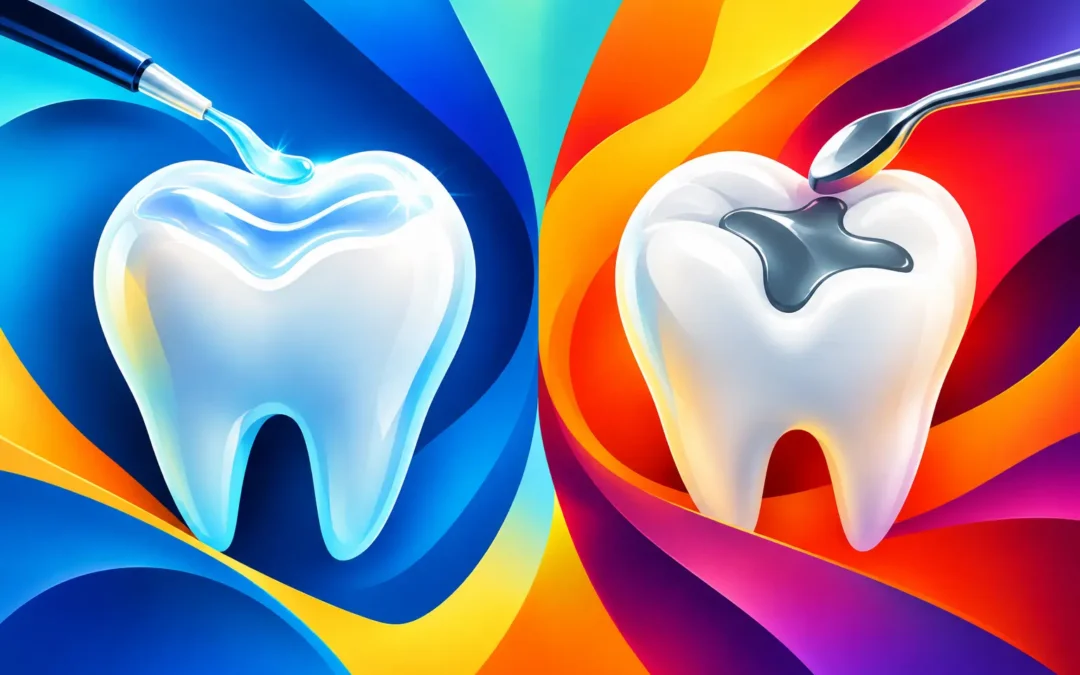
A back molar can look perfectly healthy and still have deep grooves that trap food and bacteria. That is where the choice between dental sealants versus fillings often comes up. While both can protect a tooth, they serve very different purposes: sealants help prevent decay before it starts, while fillings repair damage after decay has created a cavity.
For parents, this distinction can be especially helpful when a child’s permanent molars come in. For adults, it can clarify why a dentist may recommend preventive care for one tooth and restorative treatment for another. The right option depends on what your dentist sees during the exam, not simply on age or whether a tooth hurts.
What Is a Dental Sealant?
A dental sealant is a thin protective coating placed on the chewing surface of a back tooth, usually a molar or premolar. These teeth have natural pits and grooves that can be difficult to clean thoroughly with a toothbrush, especially for children who are still building good brushing habits.
The sealant flows into those grooves and hardens, creating a smoother surface that keeps food particles and bacteria from settling in as easily. Placing a sealant is usually quick and does not require numbing, drilling, or removing healthy tooth structure.
Sealants are most often recommended soon after permanent molars erupt, commonly around ages 6 and 12. However, they are not only for children. Some adults with deep grooves and no decay may also benefit from sealants. Your dentist will look at the condition of each tooth individually.
A sealant is not a replacement for brushing, flossing, fluoride, or regular cleanings. It is an added layer of protection for parts of the tooth that are naturally more likely to collect plaque.
What Is a Filling?
A filling is a restorative treatment used when a tooth already has decay, a small cavity, or minor damage. During the appointment, the dentist removes the decayed or weakened portion of the tooth and places filling material to restore its shape and function.
Modern tooth-colored fillings are commonly used because they blend naturally with the tooth. More importantly, they close the area where decay was removed, helping prevent bacteria from continuing deeper into the tooth.
A filling may be needed even if you do not feel pain. Cavities can begin quietly, and a small area of decay may be found during an exam or on X-rays before it causes sensitivity. Treating a cavity early can often mean a simpler, smaller filling. Waiting until a toothache develops can allow decay to reach the inner nerve tissue, which may require more extensive treatment such as a crown or root canal.
Dental Sealants Versus Fillings: The Main Difference
The simplest way to think about dental sealants versus fillings is prevention versus repair. A sealant protects a healthy tooth that is at higher risk for decay. A filling repairs a tooth after decay or damage has already occurred.
A sealant covers the outside chewing surface without removing tooth material. A filling requires the dentist to clean out decay before rebuilding the affected part of the tooth. Because of this, a sealant is generally less involved and may be completed without anesthesia, while a filling may require numbing depending on its location and depth.
Neither option is automatically better than the other. If the tooth is healthy but has deep grooves, a sealant may be a smart preventive choice. If the tooth has a cavity, placing a sealant over it would not solve the problem. The decay needs to be removed and the tooth restored with a filling.
When a Sealant May Be Recommended
Dentists often consider sealants when a tooth has deep chewing grooves but no signs of decay. Children and teenagers are common candidates because newly erupted permanent molars can be hard to reach and may be more vulnerable while brushing skills are still developing.
Sealants can also be useful for patients who have had cavities in other molars, have difficulty cleaning the back teeth, or have grooves that hold staining and plaque. The recommendation is based on risk, not judgment. Even families with good home routines may benefit from extra protection in hard-to-clean areas.
Before placing a sealant, the dentist checks the tooth carefully. If there is a suspicious area, an X-ray or closer examination may be needed to confirm whether the enamel is healthy. A sealant works best when it is placed on a clean, sound tooth.
When a Filling Is the Better Choice
A filling is appropriate when decay has created an opening in the tooth or when an existing filling is broken, leaking, or worn down. It can also repair a small chip or area of damage caused by biting pressure.
Some people assume a cavity always causes sharp pain, but that is not the case. Early cavities may have no symptoms at all. Others may cause sensitivity to sweets, cold drinks, or pressure when chewing. If a tooth is painful, swollen, or keeping you up at night, it is best to call the dental office promptly rather than trying to wait it out.
A filling can stop a small problem from becoming a much bigger one, but it still needs care afterward. Brushing twice a day with fluoride toothpaste, cleaning between teeth, and keeping regular exams help protect the edges of the filling and the rest of the tooth.
How Long Do Sealants and Fillings Last?
Both sealants and fillings can last for years, but neither should be considered permanent. Sealants can wear down or chip over time, especially on teeth that do a lot of chewing. During regular checkups, your dentist can make sure they are still sealed well and touch up or replace them if needed.
Fillings also experience daily pressure from chewing and may eventually need repair or replacement. How long they last depends on the size of the filling, the tooth involved, bite pressure, home care, and whether new decay develops around the edges.
The goal is not to make dental work last forever without attention. The goal is to catch small changes early, when treatment is usually easier, more comfortable, and less costly.
What About Cost and Insurance?
Cost is a real concern for many families, and preventive care can make a meaningful difference over time. Sealants are generally less expensive than fillings because they are preventive and do not involve removing decay. Many dental insurance plans cover sealants for children, though coverage rules can vary by plan and age.
Fillings may also be covered in part by dental insurance or SoonerCare, depending on eligibility and plan details. Before treatment, it is reasonable to ask the office about expected costs, coverage, and payment options. Clear information can help you make decisions without surprises.
Delaying care because of cost concerns is understandable, especially when a tooth does not hurt. Still, an exam can provide answers before the problem becomes urgent. A small cavity is usually simpler to treat than an infection or a broken tooth.
Helping Children Feel Comfortable With Care
For a child who is nervous about the dentist, sealants can be a positive introduction to preventive treatment. The appointment is typically straightforward, and the child can learn that dental visits are not only for fixing painful problems.
If a filling is needed, a calm explanation can help. Let your child know the dentist will make the tooth comfortable, clean away the unhealthy part, and help the tooth work properly again. Avoid using frightening words or promising that they will not feel anything. Instead, remind them that the dental team will explain each step and help them feel safe.
At Sooner Dental Care, families can ask questions about recommended treatment, insurance processing, and ways to make visits more comfortable. Knowing what to expect can ease anxiety for both children and adults.
A Small Step Can Protect a Lot of Tooth
Whether your family needs a preventive sealant or a restorative filling, the best time to address a tooth concern is usually before it becomes painful. Regular exams give your dentist the chance to spot deep grooves, early decay, and worn fillings while choices are still straightforward. If you have noticed sensitivity, a dark spot, or food catching in the same place, scheduling a visit can bring clarity and help protect that smile for the years ahead.