
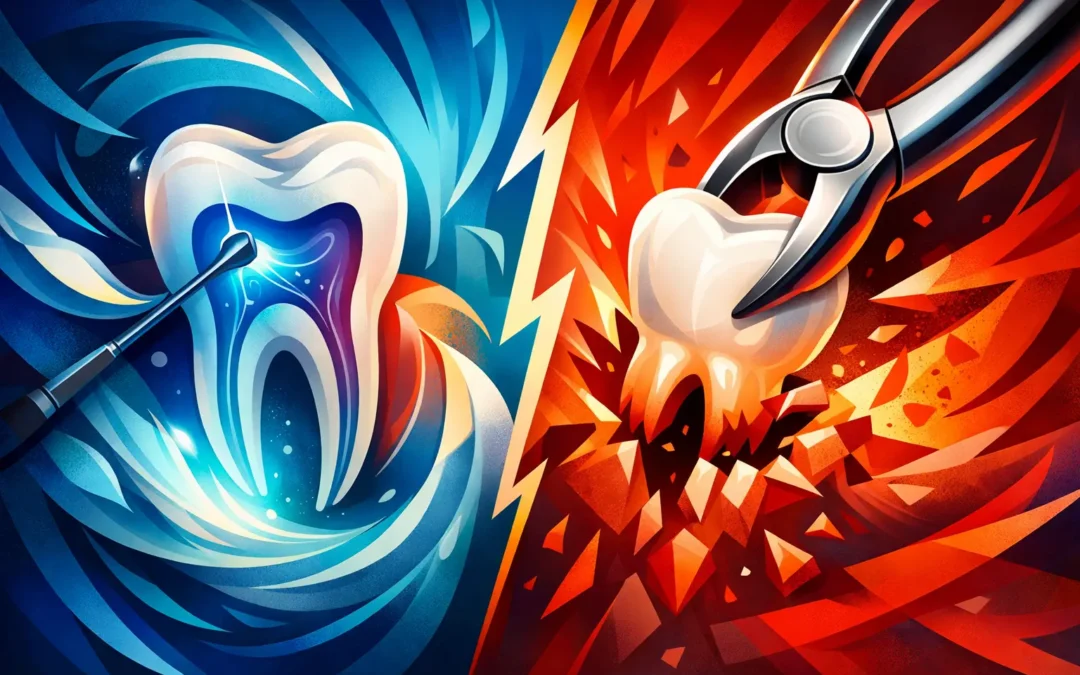
A bad toothache has a way of making every decision feel urgent. When your dentist says the tooth may need a root canal or an extraction, the question usually is not just root canal vs extraction. It is also, Which option will stop the pain, fit my budget, and make the most sense for my long-term health?
The honest answer is that it depends on the tooth, the infection, your overall dental health, and what happens after treatment. In many cases, saving a natural tooth is the first choice. In others, removing the tooth may be the better and more predictable option. What matters most is getting clear guidance and timely care before the problem gets worse.
Root canal vs extraction: what is the difference?
A root canal is a treatment that saves a tooth when the soft tissue inside it, called the pulp, becomes infected or badly inflamed. During treatment, the damaged tissue is removed, the inside of the tooth is cleaned, and the space is sealed. In many cases, the tooth is then protected with a crown so it can keep functioning normally.
An extraction removes the entire tooth. This may be recommended if the tooth is too damaged to restore, the infection is too advanced, there is severe bone loss, or the tooth is causing crowding or other problems. Once a tooth is removed, the space it leaves behind often needs to be addressed, especially if it is a permanent tooth that plays an important role in chewing or keeping nearby teeth in position.
Both treatments can relieve pain and treat infection. The main difference is whether the goal is to keep your natural tooth or remove it.
When a root canal is usually the better choice
If a tooth can be saved safely and predictably, that is often the preferred path. Your natural tooth helps you chew comfortably, keeps your bite more stable, and avoids the need to replace the missing tooth later.
A root canal may be a good option when the structure of the tooth is still strong enough to support a filling or crown, the roots are healthy enough to keep the tooth stable, and the surrounding gums and bone are in decent shape. It is also a strong choice when keeping that tooth helps avoid shifting, bite changes, or extra restorative work.
Many patients worry that a root canal will be more painful than an extraction. In reality, modern root canal treatment is usually focused on removing the source of pain, not creating more of it. With local anesthesia and a comfort-focused approach, most people say it feels similar to getting a filling. Some soreness afterward is normal, but the severe tooth pain caused by infection is often much worse than the treatment itself.
There is also a long-term advantage. Saving a tooth helps preserve your natural chewing function and can reduce the need for more complex dental work in the future.
When extraction makes more sense
Sometimes the best way to protect your health is to remove the tooth. This can be true when a tooth is severely broken below the gumline, has too much decay to support a restoration, has advanced periodontal disease, or has already had significant damage that makes saving it unlikely to last.
Extraction may also be recommended when cost is a major concern and a patient needs immediate relief, especially if the tooth has very limited long-term potential. That said, removing a tooth is not always the simpler or less expensive option once you consider what may come next.
If the extracted tooth is not replaced, nearby teeth can begin to shift. Over time, that can affect your bite, make chewing harder, and create spaces that trap food and plaque. If replacement is needed, the total cost may include options like a bridge, partial denture, or implant. That is why an extraction sometimes starts as the lower-cost choice but becomes the more involved one over time.
Cost, pain, and recovery
For many families, the decision is not only clinical. It is practical. Patients want to know what will hurt less, what will heal faster, and what will be easier on the budget.
A root canal often costs more upfront than an extraction, especially if a crown is needed afterward. But it may help you avoid the added cost of replacing a missing tooth later. An extraction is usually less expensive at the time of treatment, but the total cost can rise if you need restorative work to fill the gap.
Pain is another common concern. Both treatments are done with numbing medication to keep you comfortable during the procedure. Recovery can vary. After a root canal, you may have mild tenderness for a few days, especially when chewing. After an extraction, healing may involve swelling, soreness, and more noticeable dietary restrictions at first. If the extraction is surgical or the tooth was badly infected, recovery can be more involved.
The idea that extraction is always the easy way out is not necessarily true. Removing a tooth can solve the immediate problem, but the healing process and the long-term effects on your mouth deserve just as much consideration.
Root canal vs extraction for long-term oral health
When dentists compare root canal vs extraction, they are not only looking at today’s pain. They are also thinking about how the choice will affect the rest of your mouth months and years from now.
Keeping a natural tooth, when possible, usually supports better alignment and more normal biting function. It helps maintain spacing and often feels more natural when chewing. A restored tooth is not exactly the same as an untouched tooth, but it can continue serving you well for many years.
Extraction can still be the right choice, but it often creates another decision. Will the missing tooth be replaced, and if so, how? That next step matters. A missing molar in the back of the mouth may not be visible in a smile, but it can still affect chewing and the way pressure is distributed across your teeth.
This is where treatment planning matters. The right answer is not based on one procedure sounding better than the other. It is based on whether the tooth is restorable and whether the final result will be stable, healthy, and realistic for your situation.
What your dentist will look at before recommending either option
A good recommendation should be based on more than a quick glance. Your dentist will usually examine the tooth, take X-rays, and look at the extent of decay, infection, fracture, and bone support. The position of the tooth matters too. So does your bite.
For example, a front tooth and a back molar do not always present the same pros and cons. A tooth that can technically be saved may still not be the best candidate if the remaining structure is too weak. On the other hand, a painful tooth that looks severe at first may still be treatable and worth preserving.
Your medical history, comfort level, and finances also matter. Some patients need the option that resolves pain fastest. Others want to do everything possible to keep their natural teeth. A patient-centered dental office should talk through those factors honestly so you understand both the immediate and long-term impact of your choice.
If you are trying to decide, do not wait too long
Delaying treatment is one of the biggest reasons a tooth that might have been saved ends up needing removal. Infection can spread, cracks can deepen, and pain can increase quickly. What starts as a manageable problem can turn into an urgent one.
If you have swelling, sensitivity to hot or cold that lingers, pain when biting, or a tooth that feels damaged or loose, it is worth getting examined as soon as possible. Even if the final answer is extraction, early care can help prevent more serious complications and may give you more treatment options.
For families and individuals who are balancing fear, scheduling, and cost, this part matters. You do not have to have everything figured out before you call. A caring dental team can help you understand what is happening, explain your options in plain language, and create a treatment plan that fits your needs.
At Sooner Dental Care, that kind of practical, compassionate guidance is part of helping patients feel comfortable moving forward.
A painful tooth can make the choice feel overwhelming, but you do not have to guess your way through it. The best next step is a clear exam, an honest conversation, and a plan that protects both your comfort now and your oral health later.